Edition #18. The biggest AI development this month was about power: who controls the best models, and who can take that access away? First the essentials, then my analysis.
- What happened: Anthropic put Fable 5 live, its most powerful model ever. The US government forced it offline within 72 hours; since July 1 it's back, with stricter filters at the government's request.
- Not just Anthropic: OpenAI is releasing its new GPT-5.6 only to government-approved customers. Two labs, the same pattern.
- Why it matters: the government now decides who gets access to the best AI, and on what terms. Access has become a geopolitical permission.
- My take: the US is reacting too defensively and is pushing everyone toward open source. Open source wins this, and running locally becomes the norm.
- For you: most SMEs won't notice a thing, just stay on Claude. If you operate at scale or in a regulated sector, make sure you can switch providers easily.
What actually happened
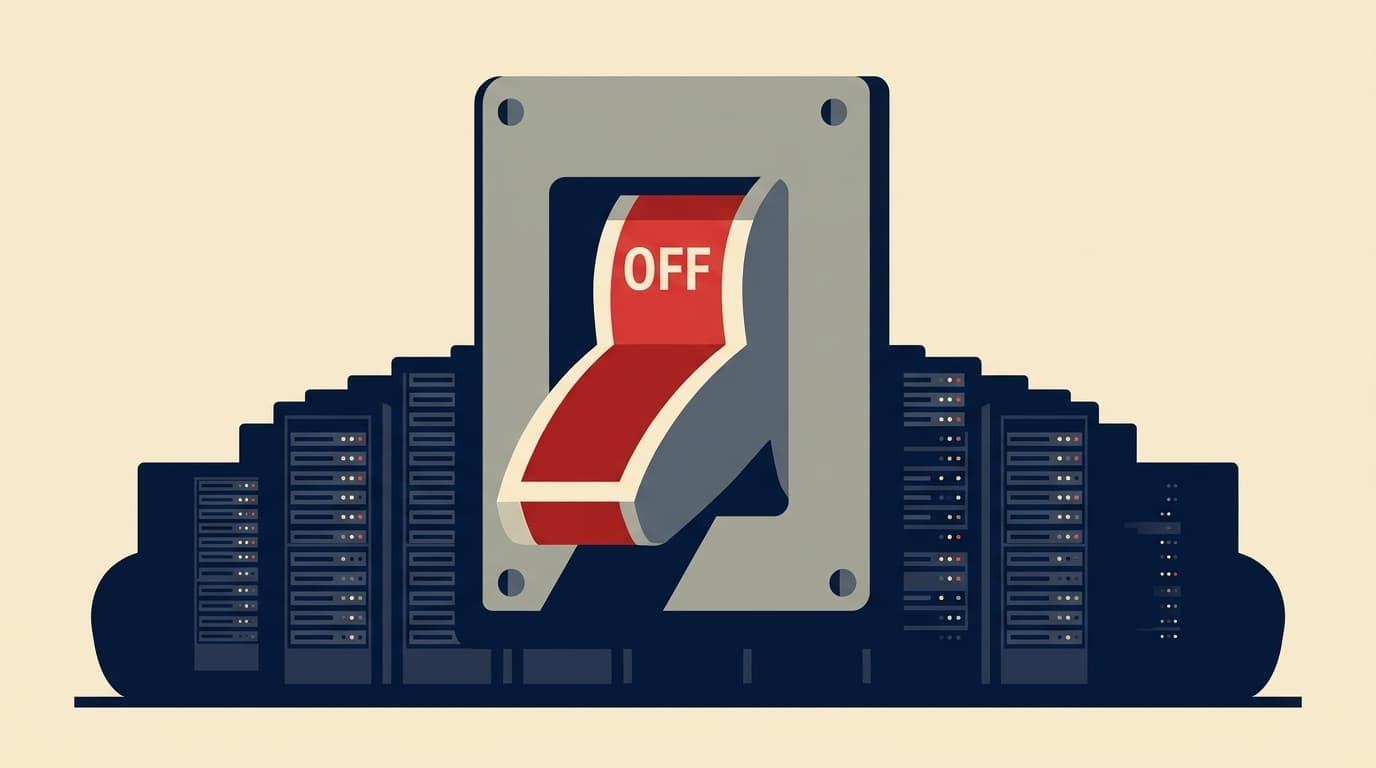
The model going offline isn't the news. Fable 5 is back online today: after more than two weeks of negotiating in Washington and a new safety classifier, the government lifted the restriction. But not unscathed: after those talks the filters are stricter and now also route more harmless requests to the older Opus 4.8. What remains is this: a government now demonstrably has a kill switch over the most powerful AI model in the world. One letter was enough to take it offline worldwide within 72 hours, and on its return the government even had a say in how the model behaves from now on. The stated reason was a jailbreak that according to Anthropic works just as well on GPT-5.5, which faced no restriction. That looks more like leverage than a safety measure.
I saw it coming, but it still stung. I'd spent days coding with it right after its release and seen how good it was, and then it was suddenly gone. I do understand the concern, a model that autonomously finds and exploits vulnerabilities is a real risk. But the US is reacting far too defensively, and it backfires: you take a model that hundreds of millions of people use offline over a jailbreak that works just as well on GPT-5.5, and you push everyone toward precisely the models you were trying to hold back. I don't blame Anthropic for then giving in, sending scientists to Washington and building stricter filters: in the US the government now sets the rules, and then you bend or you go offline. That's how access to the best AI became a political decision.
And it's not staying an incident. Shortly after, OpenAI announced GPT-5.6, its new top model, and that too arrives under restricted access: only a handful of pre-approved companies get in, for the same reason, the cyber capabilities. Sam Altman told his people the government approves access customer by customer. Within a few weeks the top models of the two biggest labs came under the control of the US government: one went offline and was only allowed back after negotiation, the other only goes to approved customers. The government decides who gets in. That's no longer an exception, it's becoming a pattern.
What I think will happen
My strongest prediction: open source wins this. The reason is simple: you can't switch off an open-source model. Every block on a US API model is free advertising for an open-source alternative that you just run on your own hardware, and that share is already growing fast: 80 percent of US AI startups now use a Chinese open-source model, and on Hugging Face the share of Chinese downloads went from 1.2 percent to about 30 percent in a year. You can't export-control your way out of an open-source race: once the weights are out, you don't get them back. I expect the standard second model in most company stacks will soon be an open-source one. Running local models becomes the norm, and honestly, I don't think that's a bad development: the more broadly the power over these models spreads, the less a single government or company can just take your access away.
On top of that, AI sovereignty stops being a conference word. At the recent G7 in France it was about little else; French Prime Minister Sebastien Lecornu said out loud that he doesn't want to lean on tools built by foreign powers, and India is heading the same way with its IndiaAI Mission. My bet: within a year you'll see the first European and government tenders requiring a model to be self-hostable or to run within its own borders. Purely out of self-preservation: every government running on foreign infrastructure has now seen live what the risk is. And as far as I'm concerned that can go faster. For Europe this is a wake-up call: time to act, and above all a better climate for tech entrepreneurs, otherwise we'll soon just be watching the US and China fight it out.
And the US labs are going to sell sovereignty back. Anthropic and OpenAI are both heading for the stock market, and a government that can switch off your flagship has enormous leverage over a company whose valuation rests on that one model. I expect on-premise and sovereign-cloud deployment to become a standard offering in the coming months, because API-only has now become a sales objection.
What this means for you
Honestly: for most readers, practically nothing changes. If you run an SME and use Claude or ChatGPT for your work, you notice none of this. Your top model just works, and a cloud API remains by far the smartest choice. The Fable 5 shutdown mainly hit a handful of big players and governments, not the entrepreneur with an AI agent for their quotes.
It only becomes your problem if you really operate at scale or sit in a sector where a government can look over your shoulder: critical infrastructure, defense, finance. If you're there, this is mainly a strategic question. My concrete advice: make sure you can switch easily between providers, and start building some experience with a European model like Mistral, purely as a fallback. If you're not there, this is mainly a story to follow, no reason to change anything today.
I'm now training my own model, locally
I'm applying it myself too. Over the past weeks I've been training my own AI model and running it locally, for exactly the reason above: not being dependent on a provider that can just go dark. How I approach that, I'm working out in a detailed article you can expect from me soon.
Want to work smarter with AI?
Want to work smarter with AI, within your company or just for yourself?
At AI Agent B.V. we help companies and individuals with AI advisory, AI implementation and practical training. Not just nice stories about what AI might do one day, but concrete help with how you deploy AI smarter today in your work, processes and daily operation. From strategy and tooling choices to training, implementation and custom AI agents.
Interested? Schedule a free half hour.